Ximena Garrido-Lecca
The Golden Crop
Ximena Garrido-Lecca uses sculpture and installation to highlight the complex relationship between Indigenous knowledge, colonial history, and modern technological and industrial systems. She foregrounds the historical landscape of her native Peru in her practice, yet she draws connections beyond those borders to consider the global impact of resource exploitation. Central to her recent work is her ongoing research into the “botanical diaspora”—the global dissemination of plants first domesticated by Indigenous cultures—tracing the movement of life, capital, and power across time and soil.
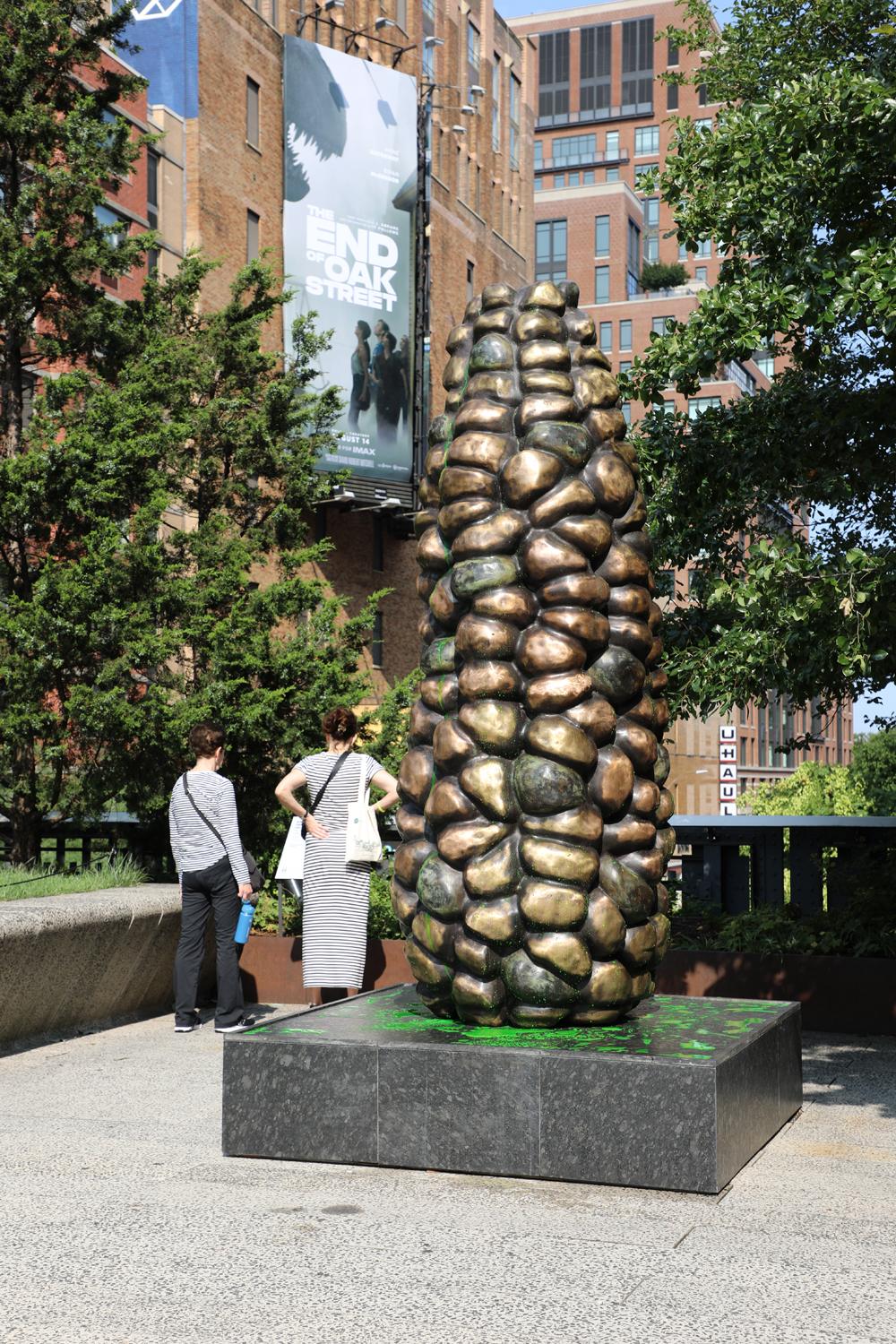
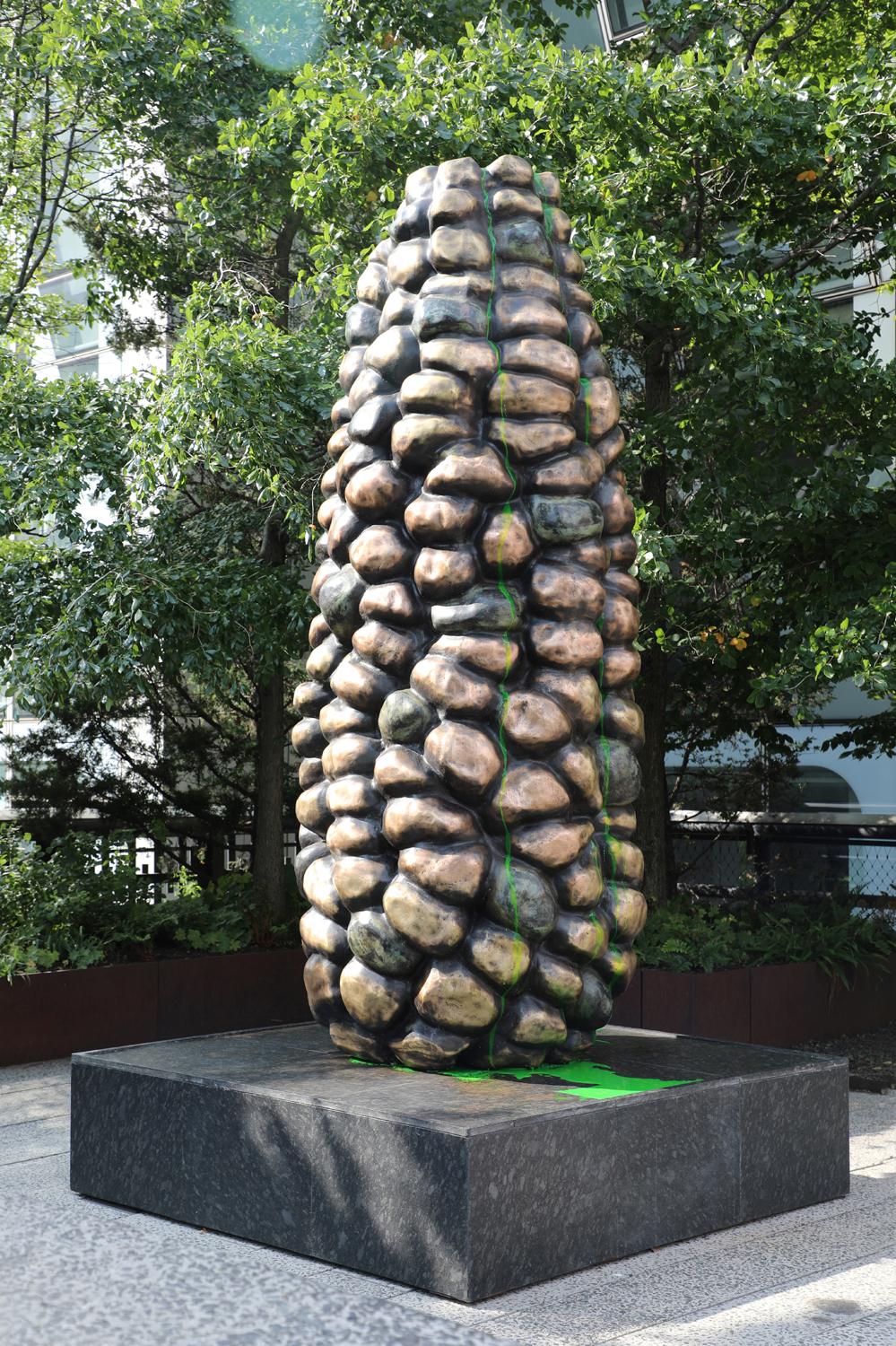
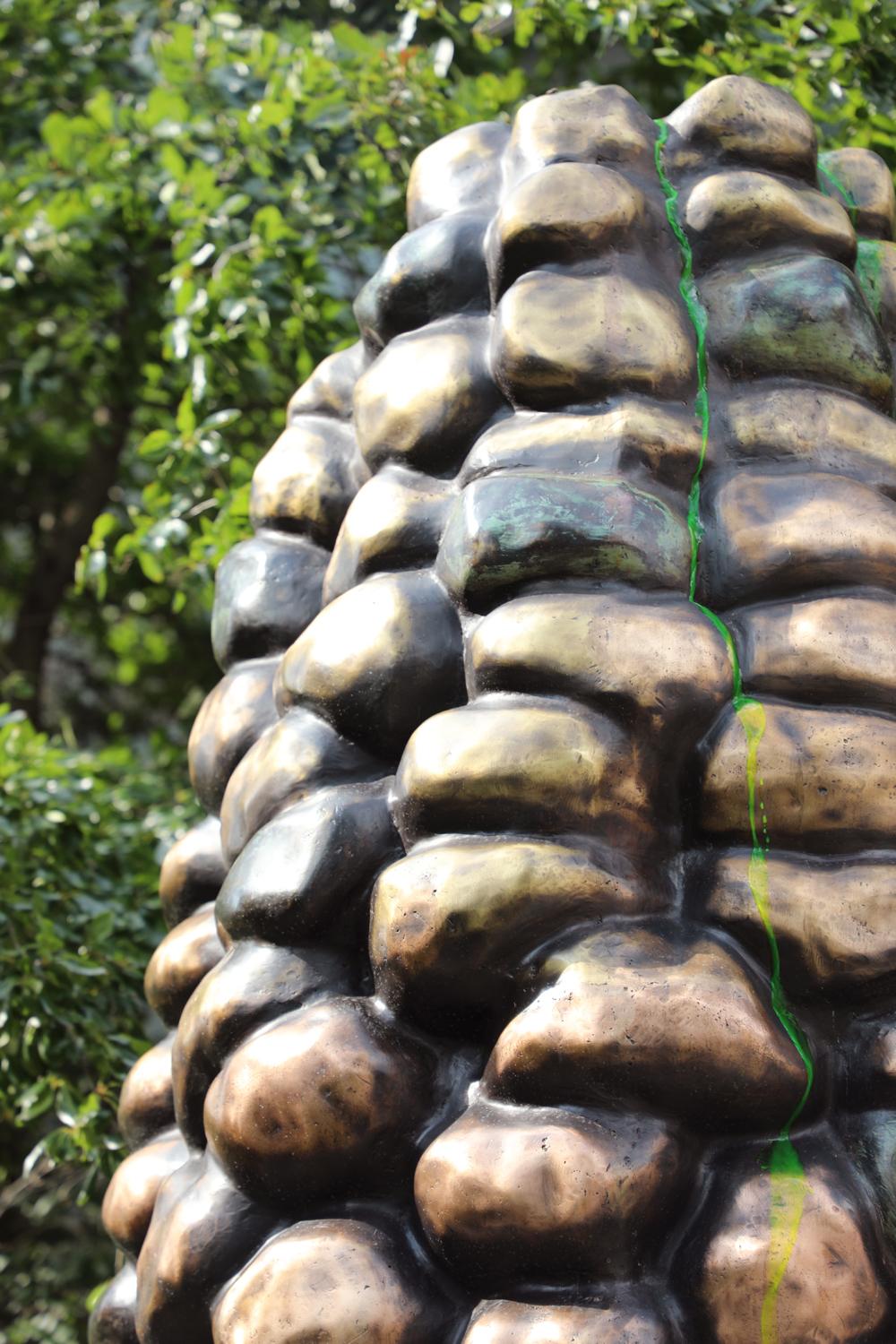
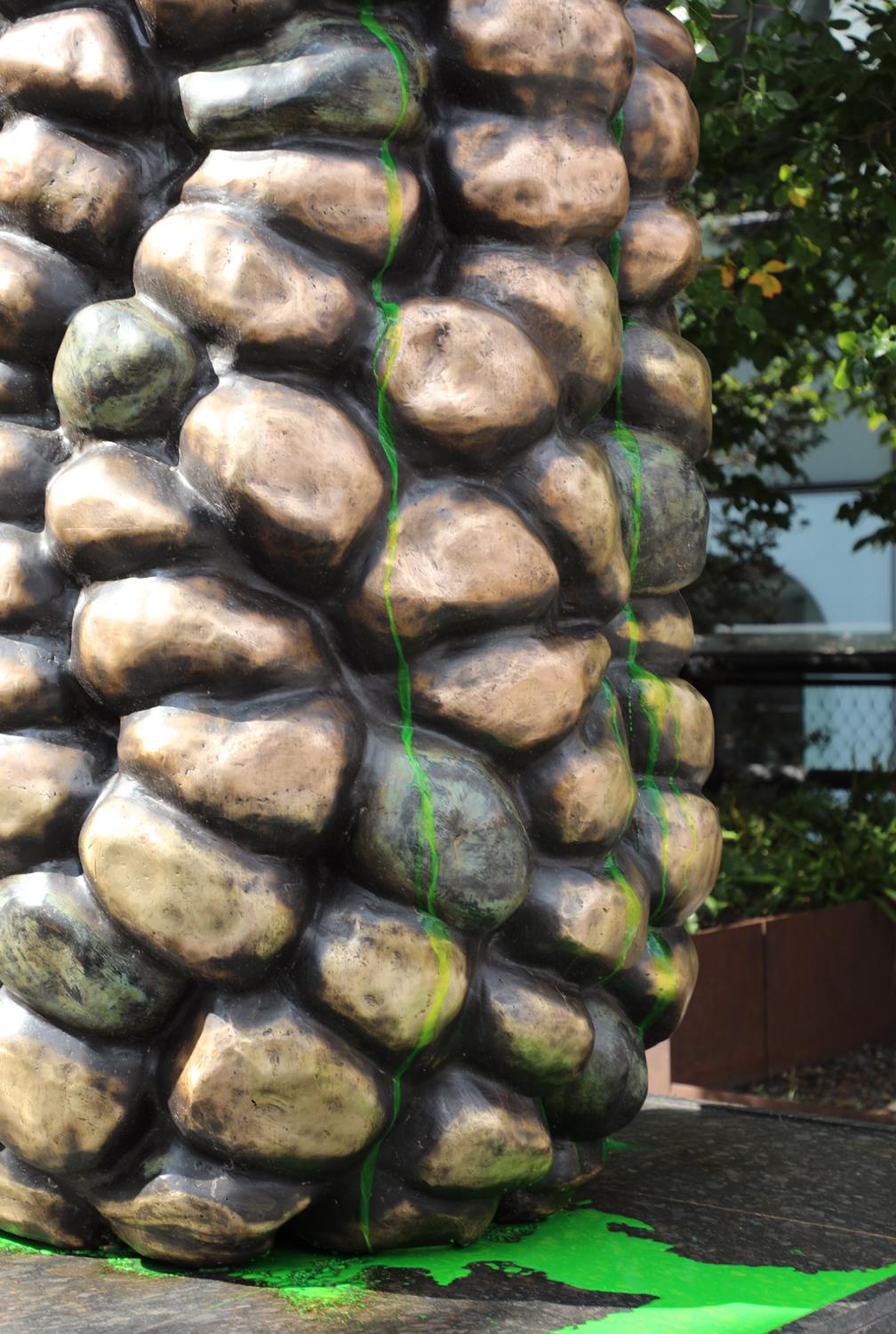
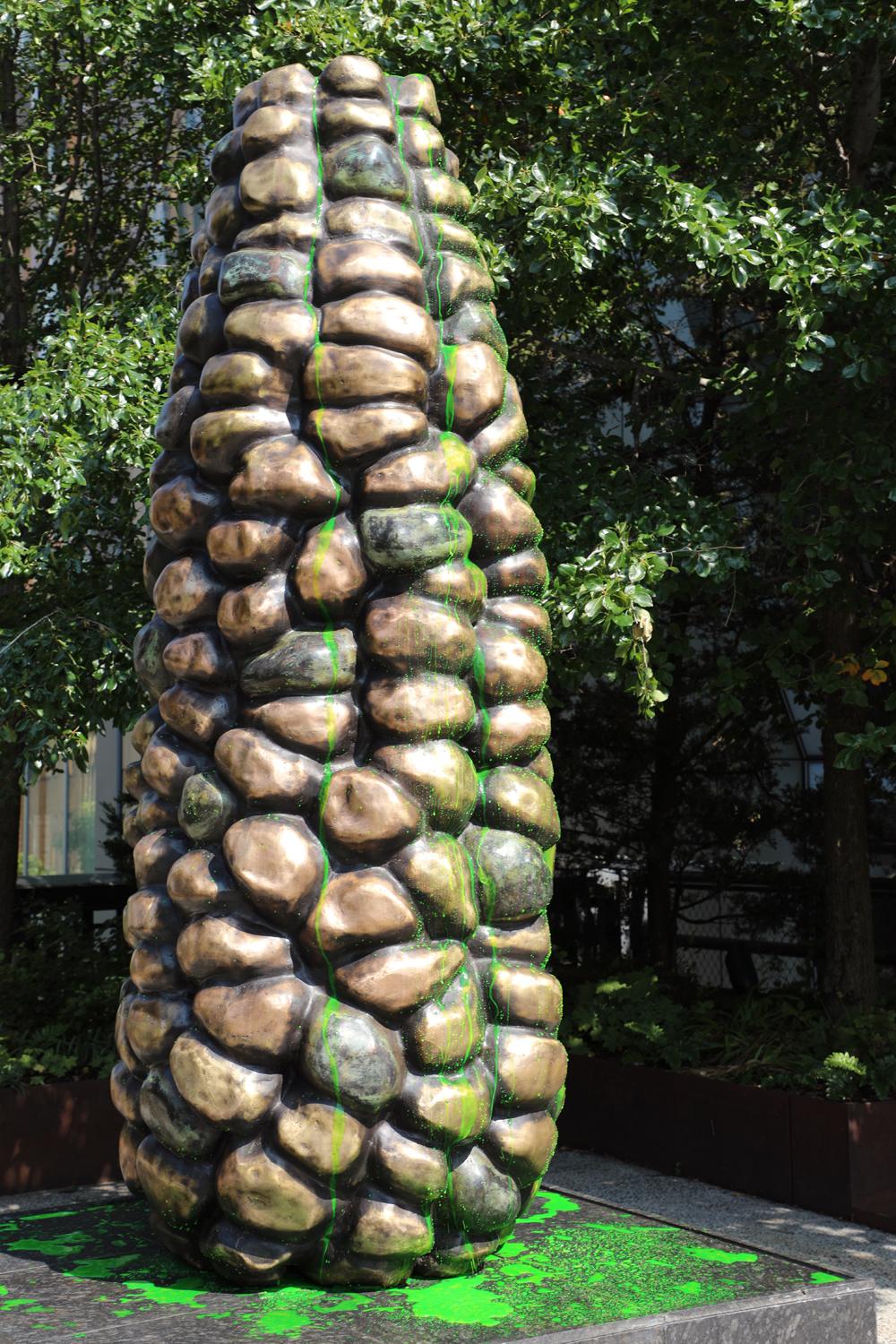
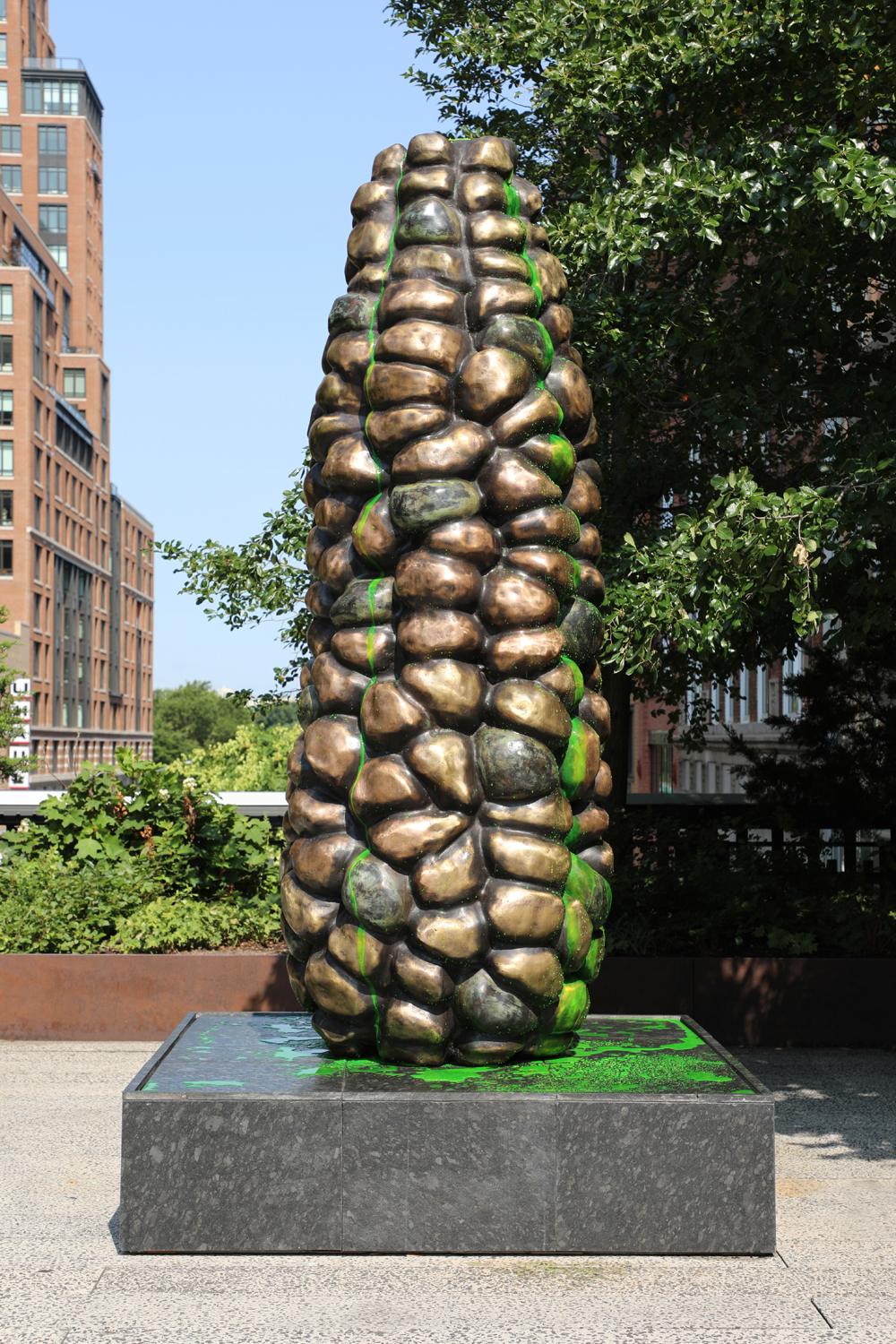
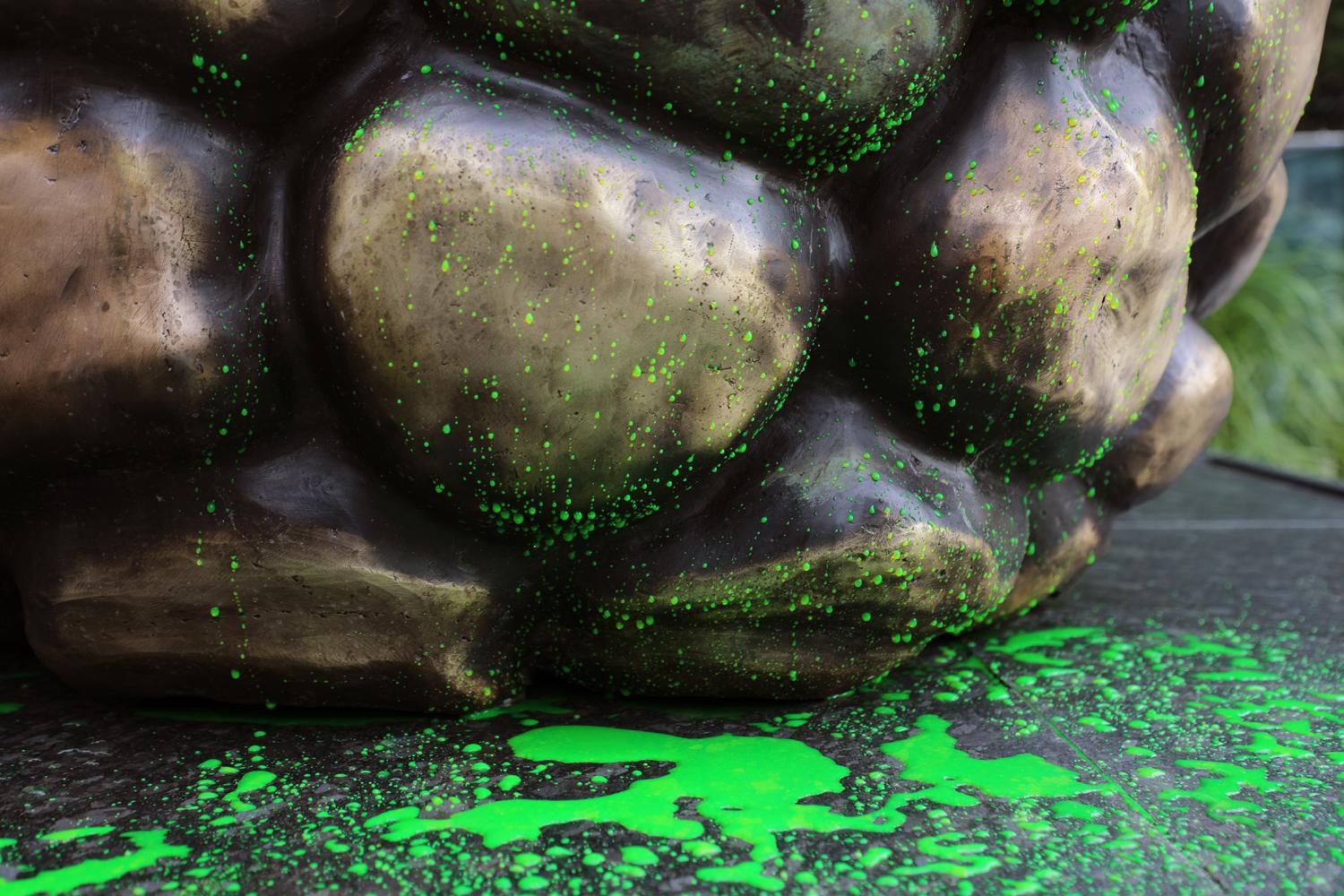
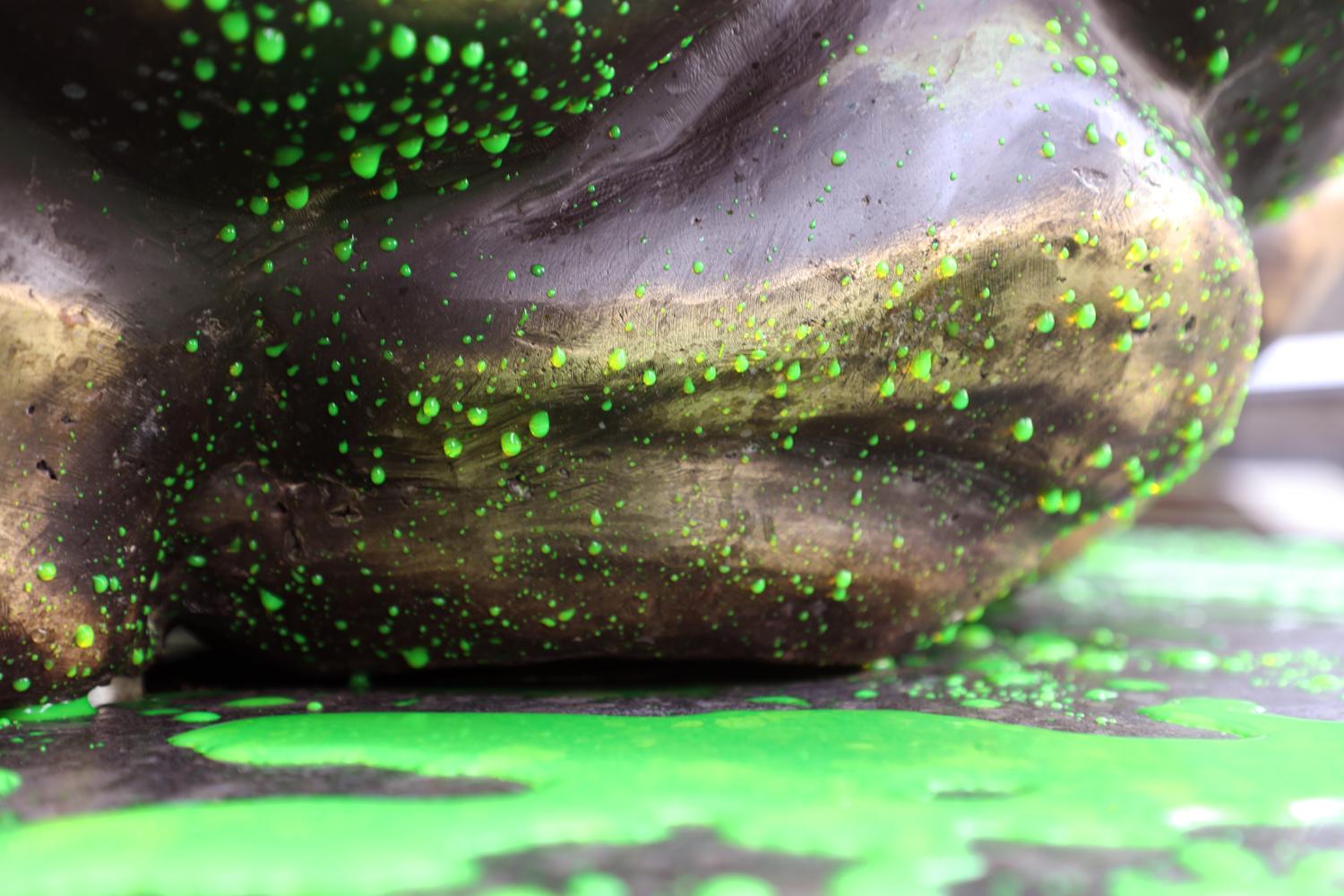
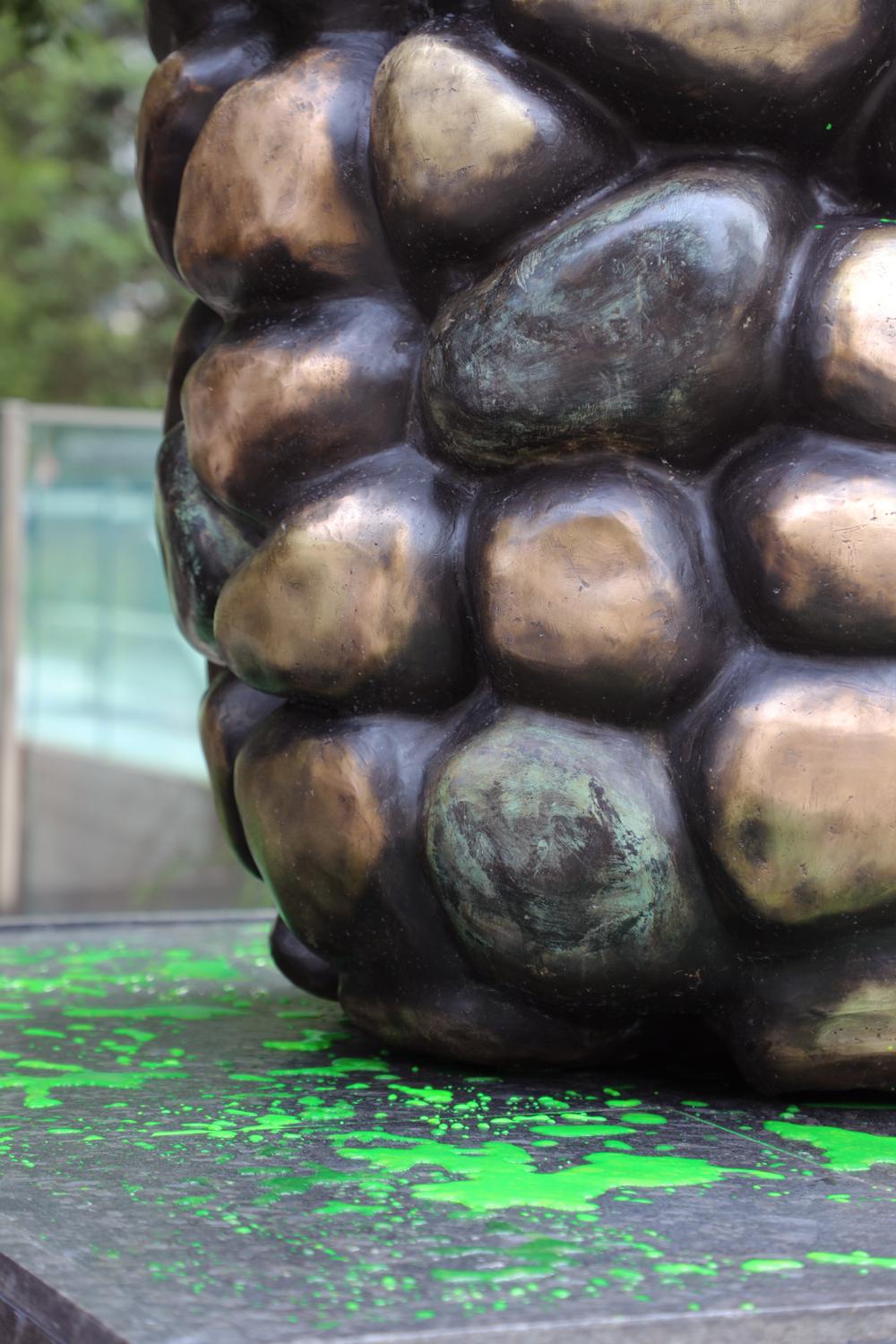
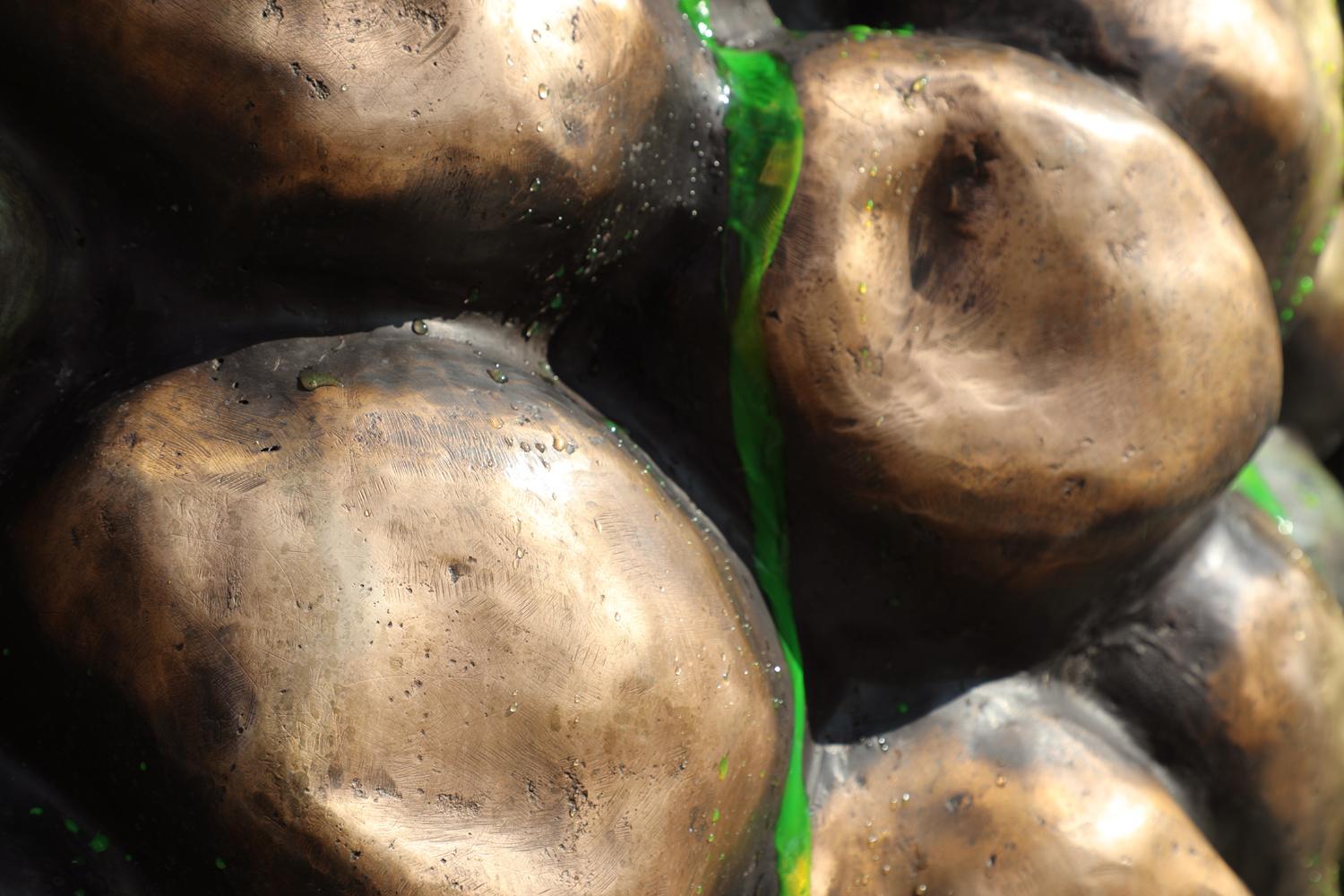
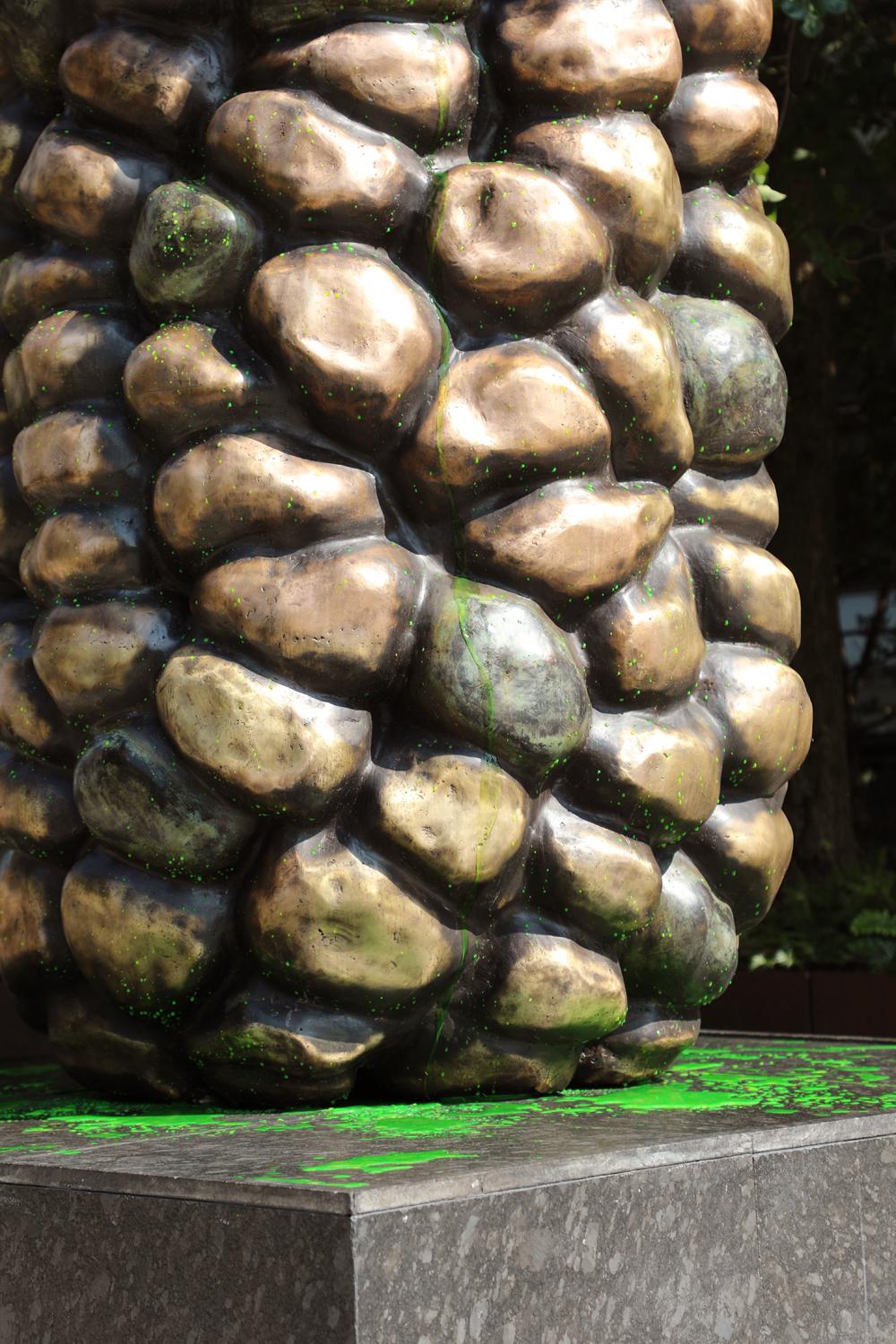
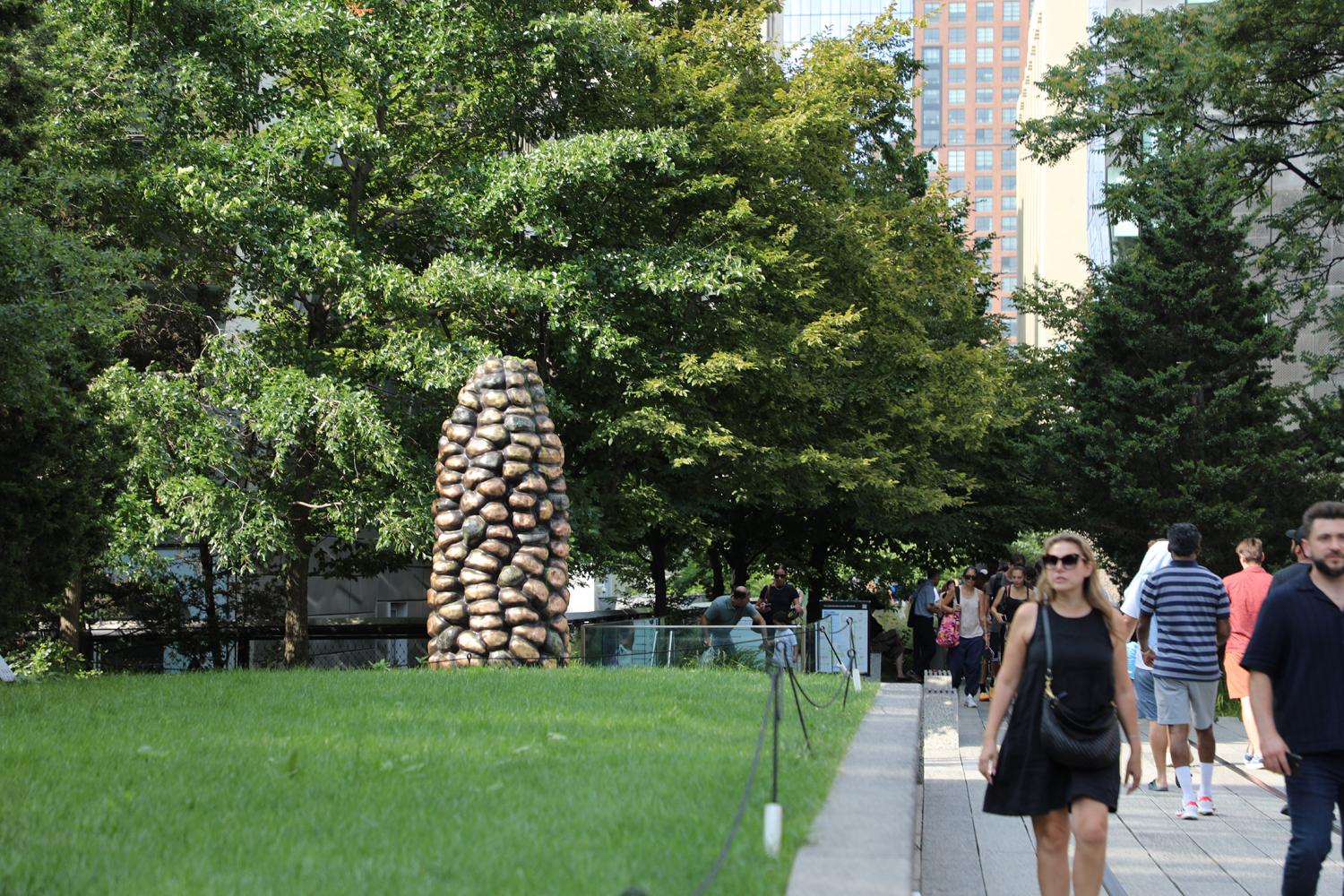
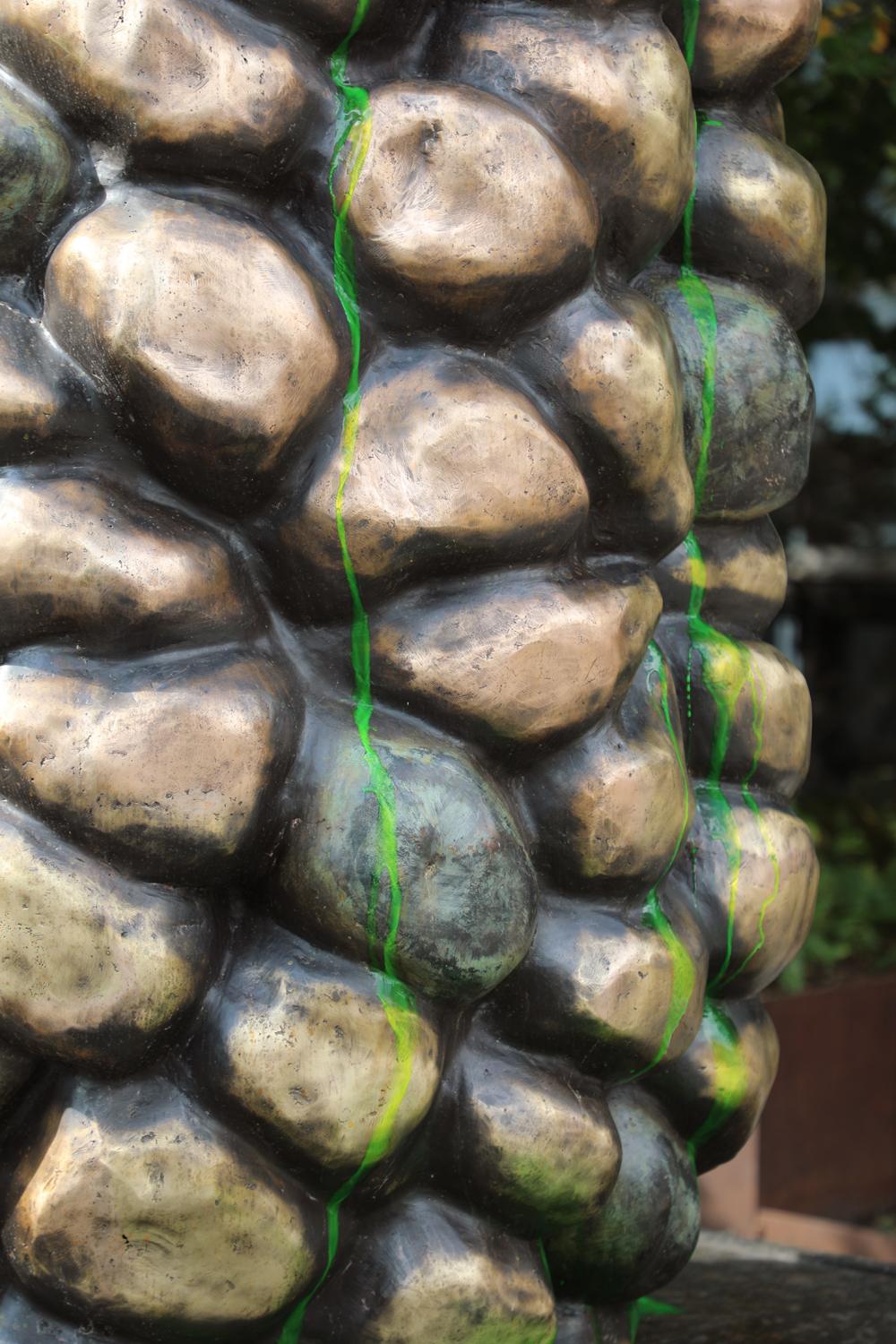
For the High Line, Garrido-Lecca presents The Golden Crop, a nine-foot corn cob water fountain, made of bronze. Corn holds a central position in pre-Columbian mythology and was considered the origin of humanity by the Aztecs and Maya. It also is one of the most important crops in the global economy, and is often genetically modified to tolerate pesticides like glyphosate. Glyphosate has sparked debates for its effects on human health and the environment, such as river contamination. Garrido-Lecca dyed the water that trickles down the corn and between the kernels to have a neon yellow hue, a reference to the toxic chemical and its effects on runoff water sources, particularly those that communities use for drinking, fishing, and recreation. The artist also highlights the way industrial farming and GMO corn have impacted the existence and strength of native varieties, risking the erosion of cultural heritage associated with these crops, ultimately, challenging the viewer to reconsider the social, health, and environmental costs of our interconnected modern world.
226_Ximena_Garrido-Lecca_The_Golden_Crop_The_High_Line_New_York_04
Ximena Garrido-Lecca uses sculpture and installation to highlight the complex relationship between Indigenous knowledge, colonial history, and modern technological and industrial systems. She foregrounds the historical landscape of her native Peru in her practice, yet she draws connections beyond those borders to consider the global impact of resource exploitation. Central to her recent work is her ongoing research into the “botanical diaspora”—the global dissemination of plants first domesticated by Indigenous cultures—tracing the movement of life, capital, and power across time and soil.
For the High Line, Garrido-Lecca presents The Golden Crop, a nine-foot corn cob water fountain, made of bronze. Corn holds a central position in pre-Columbian mythology and was considered the origin of humanity by the Aztecs and Maya. It also is one of the most important crops in the global economy, and is often genetically modified to tolerate pesticides like glyphosate. Glyphosate has sparked debates for its effects on human health and the environment, such as river contamination. Garrido-Lecca dyed the water that trickles down the corn and between the kernels to have a neon yellow hue, a reference to the toxic chemical and its effects on runoff water sources, particularly those that communities use for drinking, fishing, and recreation. The artist also highlights the way industrial farming and GMO corn have impacted the existence and strength of native varieties, risking the erosion of cultural heritage associated with these crops, ultimately, challenging the viewer to reconsider the social, health, and environmental costs of our interconnected modern world.
226_Ximena_Garrido-Lecca_The_Golden_Crop_The_High_Line_New_York_04